How to Write a Neighborhood Event Invitation People Can Actually Use
A useful neighborhood event invitation removes guesswork about cost, access, and participation, helping neighbors decide whether the gathering fits them.
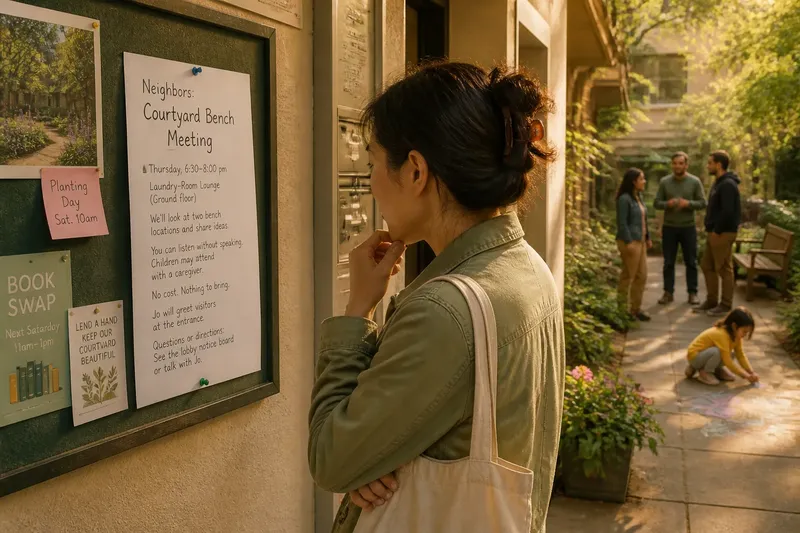
A handwritten notice taped beside the mailboxes reads, “Residents welcome at Thursday’s meeting.” A neighbor pauses, unsure whether the meeting is about building repairs or social plans, whether children can come, and whether there is a fee. A clearer neighborhood event invitation answers those practical questions before someone has to ask privately.
Invitation wording is not a promise that every person can attend. It is a way to make the terms visible: what the gathering is for, what participation involves, and what might prevent someone from joining. That clarity helps people decide for themselves without having to infer the group’s expectations.
Useful wording names the actual gathering
Broad phrases such as “community event” or “all are welcome” may work as a headline, but they do not explain the offer. Name the activity in plain language: “Bring a question about the courtyard plan,” “Sort donated books,” or “Listen to a short neighborhood history talk.” Readers can then judge whether the event matches their interests and comfort.
Be specific about the format, too. A discussion circle, a hands-on work session, and an open house place different demands on participants. If the group expects people to speak, sign up for a task, or bring an item, say so. If watching or listening is also acceptable, state that directly rather than relying on a general welcome.
Access details belong in the invitation
People often need practical information before they can decide whether to attend. Include the location and the right entrance, any cost or required supplies, whether registration is needed, and a contact route for questions. If the activity involves walking, lifting, stairs, food, or a particular language, describe the relevant conditions in direct terms.
Do not claim an event is accessible in every respect unless you can say what that means. A more useful notice identifies what is known, such as “The meeting is on the ground floor; contact Maya to ask about seating or other access needs.” If a detail is uncertain, say that plainly and explain how someone can check.
It is not worth cramming every possible caveat into a small flyer. Put the decisions most likely to affect attendance in the notice, then offer a real contact method for questions that need a personal answer. A concise, honest invitation is easier to use than a wall of fine print.
Check the invitation before sharing it
Use the list below as an editorial check. For each point, compare the notice with the actual plan; if the detail is missing or unclear, add it or name a reliable way to get the answer.
- Purpose: Check whether the activity is named in ordinary words; if it is vague, replace the label with the actual activity, or add a short explanation if the plan is still taking shape.
- Time: Check whether the start and expected finish are stated; if either is unknown, give the best honest estimate or say that the schedule is still being confirmed.
- Place: Check whether a first-time visitor can identify the entrance or meeting point; if not, add a landmark or directions, or name a contact who can guide them.
- Cost and supplies: Check whether payment or materials are required; if so, list them plainly, or state that nothing is required if participants need not pay or bring anything.
- Participation: Check whether people must speak, work, register, or take a role; if they do, explain the commitment, or name a quieter way to take part if one is available.
- Access conditions: Check for relevant stairs, walking, lifting, seating, food, or language demands; if a barrier is present, describe it and offer an alternative when possible, or provide a contact for an accurate answer.
- Questions: Check that one contact method reaches someone who knows the plan; if no one can respond reliably, assign a contact before publishing or remove the claim that questions can be answered.
Which invitation details do readers look for?
Should an invitation mention cost?
Yes. State whether attendance is free, whether donations are optional, or whether participants must pay for something. If the amount or arrangement is not settled, say so and explain when or where the confirmed information will appear.
How should a notice explain accessibility?
Name the conditions you know, such as stairs, an uneven path, or limited seating, and provide a contact for questions about individual needs. Avoid vague claims like “fully accessible” unless the group can describe the features that support that claim.
Should people know whether they have to participate?
Yes, if the event could reasonably be mistaken for a required work session or discussion. Say whether listening, observing, or leaving before the end is acceptable, and describe any task that participants are expected to do.
What if the event plan is not final?
Share the confirmed details and identify what is still undecided. Give a place to check for updates, such as the library notice board or the group’s public page, rather than filling gaps with guesses.
A worked invitation makes the choices visible
Say a tenant group is planning a courtyard meeting, and the following details are invented for this example: the meeting is about choosing a bench location, it will be in the laundry-room lounge, and the group has arranged a volunteer greeter. The initial draft reads, “All residents welcome to discuss improvements.” That wording leaves the subject, setting, and expected contribution unclear.
The organizer checks the plan and writes down the confirmed inputs: residents will compare two proposed bench locations; the meeting will be in the laundry-room lounge; listening without speaking is fine; children may attend with a caregiver; there is no required payment or preparation; and a volunteer named Jo will meet visitors at the entrance. The organizer then rewrites the notice: “Residents are invited to the laundry-room lounge Thursday to discuss two possible courtyard bench locations. You can listen without speaking; children may attend with a caregiver. No preparation or payment is required. Jo will meet visitors at the entrance. Contact the tenant group through the lobby notice board if you need directions.”
The result is a more useful choice, not a promise that every resident can attend. Someone who wants to discuss the bench can see the purpose, while someone who prefers to listen can tell that this is allowed. A resident who needs another detail has a named route to ask for it.
Use repeated questions to improve the wording
If people repeatedly ask where to meet, whether they must speak, or what to bring, add the answer to the shared notice when it applies broadly. That makes the information available to people who might not want to ask individually. Keep the distinction between an unanswered question and a confirmed fact clear.
Ask for feedback without making newcomers responsible for diagnosing the group. A community partner can review a draft for unexplained local shorthand, or an organizer can ask attendees which detail would have helped them decide. The aim is to make the invitation easier to interpret, not to require anyone to disclose personal circumstances.
Before posting, read the notice as someone who has never visited the group’s usual meeting place. If they can identify the activity, the real commitments, the relevant access conditions, and a trustworthy way to resolve an open question, the neighborhood event invitation has done its job: it lets each reader make an informed choice.