A Drop-In or a Booked Slot? Choosing a Format for Group Help
Choose a drop-in or booked slot for group help by matching the format to the request, privacy needs, and how much uncertainty a visitor can manage.
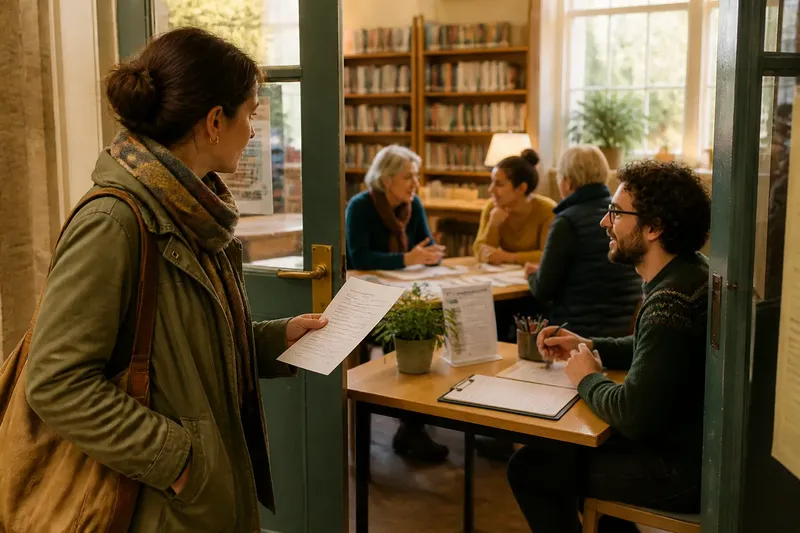
On Tuesday evening, a neighbor pauses outside the community room, holding a letter from the local council and glancing through the open door. A few people are already talking around a table, while a volunteer sits beside a sign-up sheet. For group help, the choice between a drop-in and a booked slot can decide whether that neighbor walks in, waits, or comes back another day.
Imagine a small neighborhood group arranging a weekly help session at its library meeting room. It has one volunteer who can explain forms and find local services, but no specialist who can resolve every problem. The group has heard two different requests: some people want to ask a quick question without making a commitment; others need a quieter conversation about something personal. Rather than treating one format as universally better, the organizers can match the session to the kind of help people are seeking.
Start with the shape of the request
A drop-in session lets visitors arrive during a stated window without booking a specific appointment. It suits questions that can be understood quickly, requests for directions to another service, and informal conversation that may turn into a useful referral. People can also listen to a general explanation before deciding whether to ask anything themselves.
A booked one-to-one slot sets aside a particular time for one visitor and a helper. The appointment makes room for a longer conversation, especially when someone needs to explain several connected details or would rather not speak within earshot of others. The format does not make the helper an expert; it simply gives the conversation more structure and separation.
For the neighborhood group in the imagined situation, a question about where to find a public computer might fit the shared table. A request to understand a complicated letter could require a private conversation, depending on what the visitor needs to discuss. The organizers’ first useful question is therefore not “Which format is easier for us?” but “What sort of request can this session responsibly handle?”
Give uncertainty room without making it the whole session
Visitors often do not know in advance how long a conversation will take. A drop-in gives them a low-commitment way to begin, but the wait can be hard to predict. Someone arriving near closing may have little time, while another visitor may need more support than the volunteer can offer during a busy period.
Booked slots reduce uncertainty about when a conversation will happen, but they ask a visitor to plan ahead. A person may not know what information to bring, may be unsure whether the issue is suitable, or may find a fixed time difficult to keep. A booking process that demands a detailed explanation can create another hurdle before help begins.
The group can make either arrangement clearer by explaining what visitors should expect. For a drop-in, state the arrival window, how people will be seen, and what happens if the room is busy. For appointments, explain how to request a time, whether someone may come with the visitor, and how to cancel or ask for another slot.
In the invented library session, the organizers decide to keep the door open for short questions but reserve part of the evening for appointments. They post that visitors can ask about the service without sharing personal details at the entrance. If a question needs more time, the helper can offer a later private slot rather than trying to rush through it in front of the room.
Let privacy shape the room and the invitation
Privacy is not only a matter of closing a door. It also concerns what others can overhear, what appears on a sign-up sheet, and whether someone must explain their reason for visiting in public. A table placed beside the entrance may feel exposed even if the topic seems ordinary to the organizers.
For a drop-in, the room can have a general welcome area and a separate place for a quieter conversation, if the venue allows it. A volunteer can ask whether the visitor would prefer to speak privately before requesting details. Avoid putting names beside descriptions of personal concerns on a public sheet; a simple arrival order or private check-in can reduce unnecessary disclosure.
A booked slot can offer more discretion, but the booking itself should not ask for sensitive information unless it is genuinely needed. A short request such as “I’d like to speak with a helper” may be enough to arrange a time. If the group cannot provide a private room, it should say so plainly and help the visitor consider another appropriate service.
For the hypothetical group, the library has a small study room available by reservation. The organizers use it for conversations that need discretion and keep the shared table for general questions. They do not label the study-room schedule with visitors’ concerns, and they let people choose whether to move to the quieter space.
Match the format to the help being offered
Some support works naturally in a group setting: explaining how to use a community directory, showing where to find a public resource, or helping visitors identify which local office handles a question. The shared setting can also help people discover that others have similar questions. Still, a group session should not turn into an audience for someone else’s private circumstances.
Other requests benefit from a scheduled conversation. A helper may need time to listen, clarify what the visitor is asking, and identify a suitable next contact. If the request involves legal, health, financial, or safety concerns, a neighborhood group should avoid acting beyond its competence and suggest an appropriate qualified professional or service where needed.
It helps to describe the session’s limits before anyone arrives. The group might say that volunteers can help locate forms and local contacts, but cannot make decisions for an agency or provide specialist advice. Clear limits protect visitors from expecting more than the group can offer and help volunteers refer a question rather than improvise an answer.
Use a simple decision path for each request
In the library scenario, the organizers agree on a short way to decide what to offer. They keep the questions conversational rather than turning the welcome into an intake interview:
- Can the request be handled with general information? If so, offer a drop-in conversation or point the visitor to a relevant local resource.
- Does the visitor need time to explain several details? If so, offer a booked slot where the helper can listen without a queue pressing for attention.
- Would the conversation feel exposed in the shared room? Ask whether the visitor wants a private space, and explain what the venue can provide.
- Does the request call for specialist judgment? Explain the group’s limits and help identify a qualified service rather than presenting informal guidance as a substitute.
- Is the proposed time or booking process a barrier? Offer another available route, such as a different session or a simple way to request a callback, if the group can support it.
Say a visitor arrives with a letter they do not understand and asks whether it requires a response. The volunteer can first ask, without pressing for personal details, whether the visitor wants a general explanation or a private conversation. If the visitor chooses privacy, the volunteer can arrange the study room and help identify the relevant agency contact, while making clear that the group cannot decide the matter on the agency’s behalf.
Keep the arrangement useful as needs change
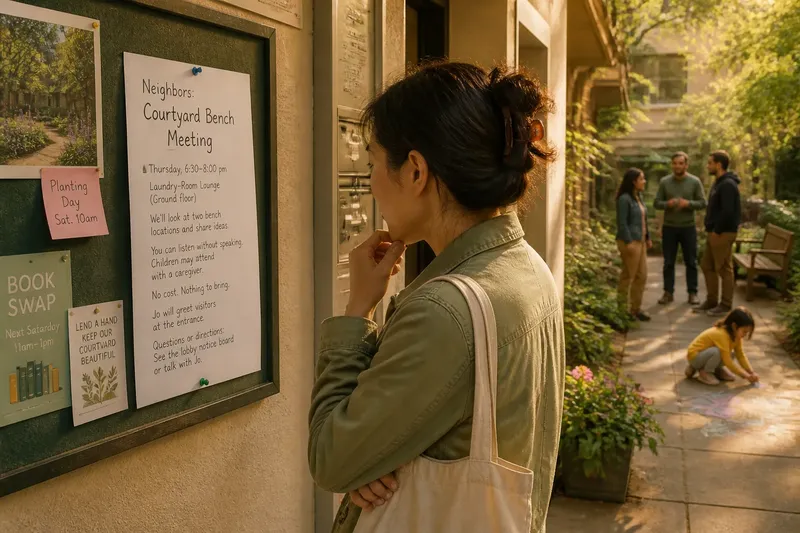
A mixed format may seem more complicated than choosing only drop-ins or only appointments, but it can be modest: one open window, a few reserved conversations, and a clear explanation of what each is for. The group can make the arrangement easier to understand with a sign at the library entrance and a short notice shared through familiar neighborhood channels.
After each session, volunteers can note broad operational observations without recording private stories: whether visitors had difficulty finding the room, whether the waiting arrangement was clear, or whether the booked slots left enough time for referrals. These notes can guide small adjustments, such as changing the welcome wording or setting aside a quieter corner. They should not become a record of visitors’ personal circumstances.
What is not worth the effort is building an elaborate booking system before the group knows what people need. A complicated form, multiple appointment categories, or a detailed triage script can make a friendly service feel like an office counter. Start with a clear invitation and a workable way to protect privacy, then adjust only when a recurring practical problem appears.
Common questions about drop-ins and booked slots?
Are drop-in sessions better for first-time visitors?
They can be easier for someone who wants to ask a small question before deciding whether to return. Make the arrival window and waiting process clear so an open invitation does not leave visitors guessing.
When should a group offer a booked one-to-one slot?
Offer an appointment when a visitor needs more time, a quieter conversation, or a predictable moment with a helper. Keep the booking request simple and avoid promising expertise the group does not have.
Can one session include both formats?
Yes, if visitors can tell which option is available and how to choose it. A shared welcome table alongside reserved private conversations can serve quick questions and more sensitive requests without forcing everyone into the same arrangement.
What should volunteers do when a request is outside the group’s role?
They can acknowledge the limit, avoid guessing, and help the visitor find a relevant qualified service or public contact. For the library group, that distinction makes both the drop-in and the booked slot more honest: they offer attention and connection, not authority they do not possess.
When choosing a drop-in or booked slot for group help, the most useful measure is whether a visitor can understand the offer and choose a level of privacy that fits the request. In the imagined library, the open table welcomes people who are unsure where to begin, while the study room gives longer conversations a quieter setting. The group has not eliminated uncertainty; it has made the next step easier to see.