A Shared Table for a First Neighborhood Welcome
Plan a first neighborhood welcome with a clear arrival point, simple hosting roles, and a comfortable flow so neighbors can settle in and connect naturally.

You set a pitcher of water on the courtyard table, then notice the entrance opens directly onto the chairs. A first neighborhood welcome works better when the hosting details are settled before anyone arrives: guests can see where to go, hosts know who is handling what, and the shared space stays easy to use.
Choose a setting that supports the gathering
Anchor the welcome to an ordinary local routine, such as tea after a residents’ meeting or a snack following the community garden hour. A familiar occasion helps people understand why the gathering is happening without turning it into a formal event.
Before inviting neighbors, confirm that the courtyard, lobby, or community room is available and permitted for the gathering. Check access arrangements, cleanup expectations, and any rules about food or furniture. If the space is shared with people who are not attending, keep a clear route through it and leave essential entrances unobstructed.
Choose a place where arrivals can pause without blocking a doorway. Put the table where hosts can greet people while keeping chairs and refreshments out of the main path. If weather could affect an outdoor plan, decide in advance whether the gathering will move indoors or be postponed, then tell guests how they will learn about that change.
Divide hosting tasks before guests arrive
Hosting takes less attention when the work is shared. One person can welcome arrivals and point out the layout; another can refill water, manage snacks, and notice when the table needs tidying. If you are hosting alone, choose a simple setup that you can leave briefly without disrupting the gathering.
- Check the venue arrangement; if the room is confirmed and accessible, set up there, but if it is unavailable, tell guests the revised location before they leave home.
- Check the route from the entrance to the table; if it is clear, keep it that way, but if chairs or bags narrow it, move them to the edge.
- Check whether serving dishes need ingredient labels; if ingredients are known, label them plainly, but if they are uncertain, keep the item separate and say you cannot confirm what it contains.
- Check who will greet late arrivals; if another host can cover the entrance, assign that person, but if you are alone, place a visible welcome note by the table.
- Check whether guests are bringing supplies; if someone has offered a specific item, confirm who will receive it, but if no one has, prepare a modest host-provided option instead.
- Check the cleanup plan; if the venue provides a clear procedure, follow it, but if it does not, bring basic supplies and leave the space as you found it.
These checks are meant to settle practical decisions, not create a production schedule. A detailed seating chart, coordinated decorations, or elaborate menu is not worth the effort for a casual neighborhood hello. Spend that attention on a clear entrance, comfortable seating, and a host who can look up from the table.
Make arrival and conversation feel natural
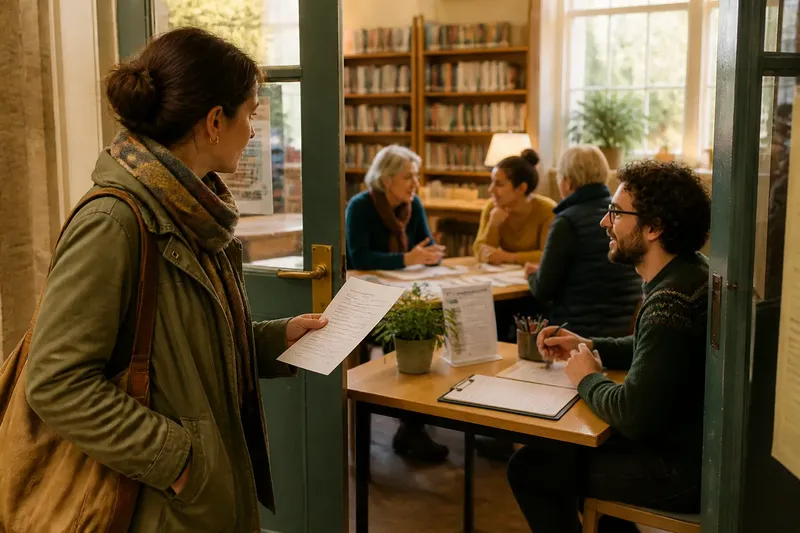
Place a small sign near the refreshments, such as “Neighbors’ tea,” and arrange chairs so someone can join without crossing the middle of a tight circle. A host can offer a short orientation: “Hi, I’m Maya from upstairs. Water and tea are here, and there’s a seat by the window.” That gives a new arrival useful information without putting them on display.
Use conversation to connect people around practical shared interests rather than asking for personal histories. A host might introduce two neighbors who both asked about the community garden, but should first check that each is comfortable with the introduction. Do not share someone’s contact details or private circumstances as a shortcut to conversation.
Say you are hosting in a courtyard and have a folding table, a pitcher, cups, and two chairs near the entrance. You move the table farther from the doorway, ask one neighbor to greet arrivals, and keep a chair at the edge of the group. When a new tenant arrives, the greeting host points out the drinks and introduces them to a neighbor who has offered to explain the garden schedule; the expected result is a clear arrival and a useful exchange, while the newcomer can still listen or leave the conversation whenever they like.
Keep the shared space comfortable for everyone
Think beyond the people at the table. Leave room for residents passing through, keep sound at a level that suits the setting, and put waste and recycling where guests can find them. If the gathering overlaps with another group’s use of the room, agree on the handoff beforehand instead of negotiating it in front of guests.
Set out refreshments that need little tending, such as water, tea, fruit, or packaged crackers. Keep serving tools together, and make ingredient information available when you have it. Guests may have dietary needs you do not know about, so avoid guessing about what is safe for them.
Give the gathering a practical end point. If the garden group is packing tools away, one host can clear the shared equipment while another lets guests know the tea table will remain open for a while. This small division of attention prevents cleanup from abruptly taking over the conversation.
What hosting details make the welcome easier?
What should I prepare if I am hosting alone?
Keep the setup compact: a welcome note, drinks, cups, napkins, and a few chairs are enough. Put supplies within reach so you can greet people without repeatedly leaving the gathering.
How should I handle a last-minute room change?
Choose a backup location before sending the invitation, then use the same communication channel to announce a change. If some guests may not see a message in time, ask a co-host to remain at the original entrance and redirect arrivals.
How can I handle food questions responsibly?
Share ingredient information you can verify, and say plainly when you do not know. Keep uncertain items separate rather than presenting a guess as reliable guidance.
What should happen when the gathering ends?
Let guests know the expected closing time and assign cleanup before the event begins. A brief goodbye and a clear route out let people leave without interrupting a host who is still packing supplies.
Use a small plan to make concrete choices
Imagine your block plans a welcome after a Saturday garden hour. For this invented situation, the starting point is a shared courtyard, one folding table, two volunteer hosts, a forecast of possible rain, and neighbors who have not been asked to bring anything.
- The hosts check the courtyard rules and learn that the community room is available as a backup. They decide to use the courtyard unless rain begins, in which case one host will post the room change on the block message board.
- They walk the entrance route and notice that the table would narrow the path. They move it beside the courtyard wall, leaving the entrance clear; arrivals can now reach the drinks without squeezing past the chairs.
- They assign one host to greet guests and the other to manage water, tea, and cleanup. If several people arrive together, the refreshments host can also point them toward the open seats rather than leaving the table unattended.
- They set out water, tea, cups, napkins, and packaged crackers, with the ingredient label visible. Since no one has offered food, they do not plan a potluck or ask guests to contribute.
- They agree to end when the garden group finishes putting away tools. One host will clear the shared equipment while the other says the tea table is open a little longer; guests can then continue talking or head home without waiting for a formal closing.
The resulting plan is modest and workable: guests have a clear entrance, hosts know their roles, and the courtyard remains usable. For a first neighborhood welcome, those practical choices matter more than a polished theme; the table simply gives neighbors a comfortable place to begin.